
Abdominal
Comprehensive abdominal imaging assessing organs, effusion, masses, inflammation, and gastrointestinal changes.
Advanced in-clinic ultrasound for accurate diagnosis and treatment planning, delivered through abdominal, thoracic, cardiac and reproductive imaging.

Comprehensive abdominal imaging assessing organs, effusion, masses, inflammation, and gastrointestinal changes.

Targeted thoracic ultrasound evaluating pleural effusion, lung changes, and masses, ideal for unstable or dyspneic patients.

Detailed cardiac imaging assessing structure, chamber size, function, and mitral valve disease staging for informed treatment.

Focused urogenital imaging assessing pregnancy, pyometra, prostatic changes, urinary tract issues, and suspected bladder stones.
Comprehensive abdominal imaging assessing organs, effusion, masses, inflammation, and gastrointestinal changes.
Targeted thoracic ultrasound evaluating pleural effusion, lung changes, and masses, ideal for unstable or dyspneic patients.
Detailed cardiac imaging assessing structure, chamber size, function, and mitral valve disease staging for informed treatment.
Focused urogenital imaging assessing pregnancy, pyometra, prostatic changes, urinary tract issues, and suspected bladder stones.
“Some patients are really fragile, so it’s about taking our time and choosing the safest approach.”
Dr Jennifer Judd BVMS GCertSAUA MANZCVS (Small Animal Radiology)
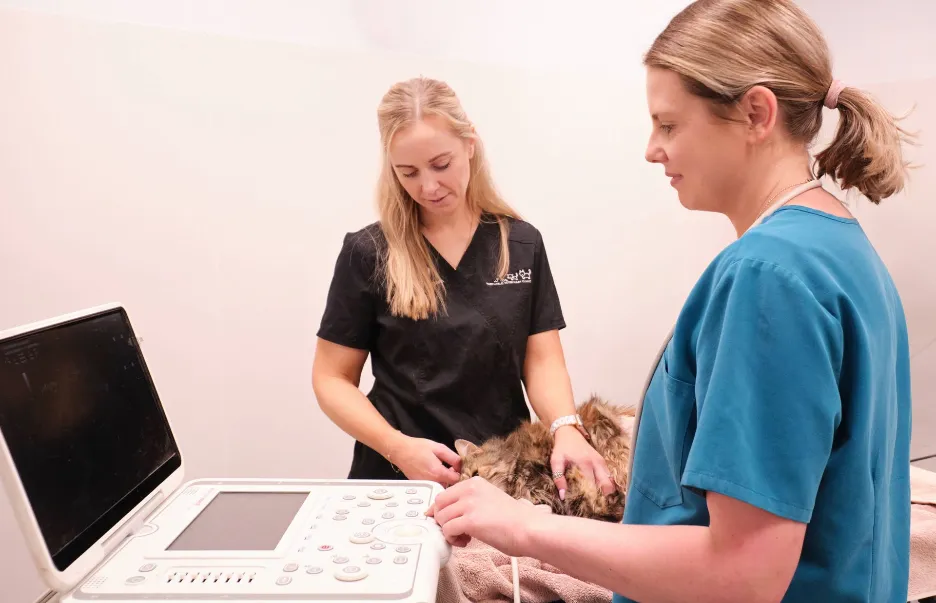
SA Veterinary Sonography provides mobile ultrasound services across South Australia. All scans are performed in your clinic, keeping patients comfortable and avoiding the disruption of external referral. We assist with abdominal, thoracic, cardiac and reproductive cases, offering gentle patient handling, detailed assessment and prompt verbal findings.
Our role is to help you progress diagnostic questions efficiently and safely, supported by a sonographer who understands the realities of general practice.
Our imaging services support the varied presentations encountered in GP clinics.
Across all services, we prioritise gentle patient handling and provide clear, clinically informed reporting.
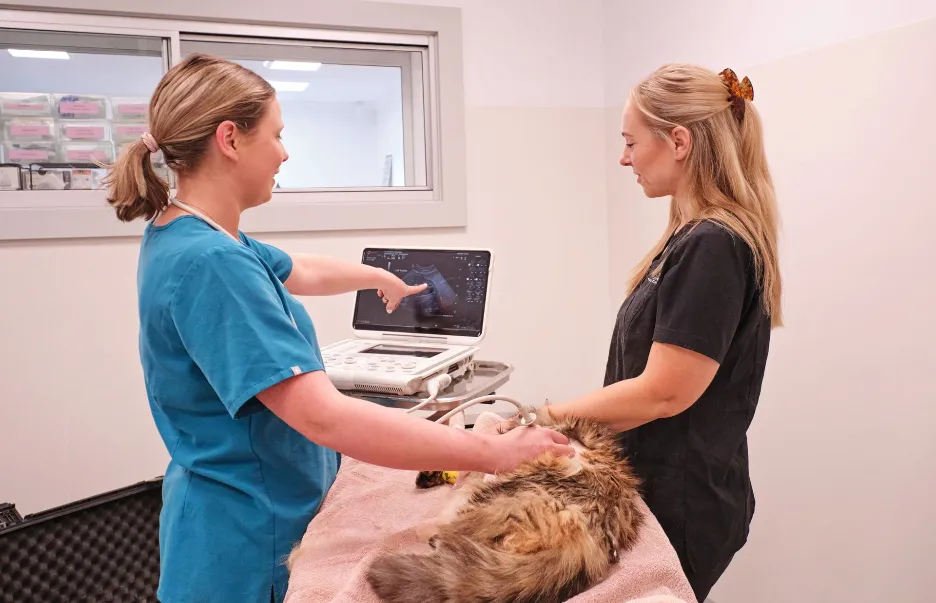
We recognise the pressures of general practice: full consult lists, uncertain cases and patients who may not cope well with travel. Our in-clinic approach is designed to streamline diagnostics, not add to your workload. We offer sedation guidance when required, work patiently with fragile or anxious animals and maintain transparent communication throughout each scan.
Verbal findings provided on the day, supported by detailed written reports, help you plan treatment, monitoring, surgery or referral with confidence. Our goal is to integrate smoothly into your workflow and contribute to improved patient outcomes.
Mobile ultrasound offers significant advantages for busy veterinary teams. On-site imaging keeps patients in a familiar environment, minimises handling and reduces stress for fragile or painful animals. It avoids referral delays, preserves continuity of care and supports clearer, more confident conversations with clients. Verbal findings delivered during the visit help you plan immediate next steps, while written reports, provided within 24 to 48 hours, offer structured interpretation for ongoing case management.
Many SA vets manage unclear presentations, time constraints and patients who are not suitable for travel. In-clinic ultrasound provides timely, accurate information within your practice, allowing you to progress the case while keeping the patient under your care.
Need imaging support?
If you’d like to arrange an ultrasound or discuss whether imaging is appropriate for a patient, please get in touch. We’re always happy to talk through a case and help you plan the next step.
Have questions? We’re here to support you. Below are answers to common queries about our veterinary ultrasound services.
Abdominal, cardiac, thoracic and reproductive presentations can all benefit from ultrasound when clinical signs are unclear, radiographs are inconclusive or more detailed soft tissue assessment is needed. Common indications include weight loss, vomiting, heart murmurs, pleural effusion or suspected pyometra.
Yes. We routinely scan cats and small dogs, using probes suitable for their size. Abdominal ultrasound is especially valuable in feline cases of weight loss, vomiting or suspected pancreatitis, and we always prioritise patient stability for fragile cardiac cats.
Fine needle aspirates (FNAs) are often recommended when an abnormal organ, mass or lymph node is identified. If the lesion is accessible and clinically relevant, we’ll flag it for sampling during the scan, and your clinic team can proceed based on patient stability and consent.
Yes. Abdominal ultrasound is beneficial for investigating chronic vomiting, weight loss and suspected gastrointestinal disease in cats. It can help distinguish between IBD, lymphoma, pancreatitis, or other pathologies that may not be obvious on blood tests or radiographs alone.
Ultrasound is particularly helpful when X-rays are inconclusive, especially for non-metallic foreign bodies like wood or fabric. It can identify obstructive patterns, bowel dilation, or mesenteric inflammation – providing a real-time view of what’s going on.
In many cases, yes, but ultrasound has depth limitations in giant breeds. If you suspect cranial liver disease or deep-seated lesions in a 50kg+ dog, CT may offer better visualisation. Feel free to call us to discuss the best approach for each case.